
Consulting Services

IPAC is a majority Indigenous-owned “boutique firm” providing professional consulting services across forestry, geomatics and survey, and wood fibre management. Since 1992, we have built decades of field and operational experience serving the forestry, mining, oil and gas, energy, utilities, and municipal sectors throughout BC, as well as into Alberta and the Yukon. Our customers include project owners and proponents, tenured and non-tenured resource-based companies, First Nations organizations, government agencies, and private individuals. Our experience spans forestry and timber harvesting operations, mine clearing and construction, pipeline and utility corridors, facilities construction, line locates, and more. We bring qualified professionals and crews, modern technologies, well-maintained equipment, and practical problem-solving to every engagement. IPAC also brings unique first-hand experience through its ownership and management of tenure-based companies operating in BC’s forestry and mining sectors. We work both independently and through valued Indigenous partnerships and non-Indigenous alliances, with a focus on results and deliverables rather than process.


Geomatics & Land Survey
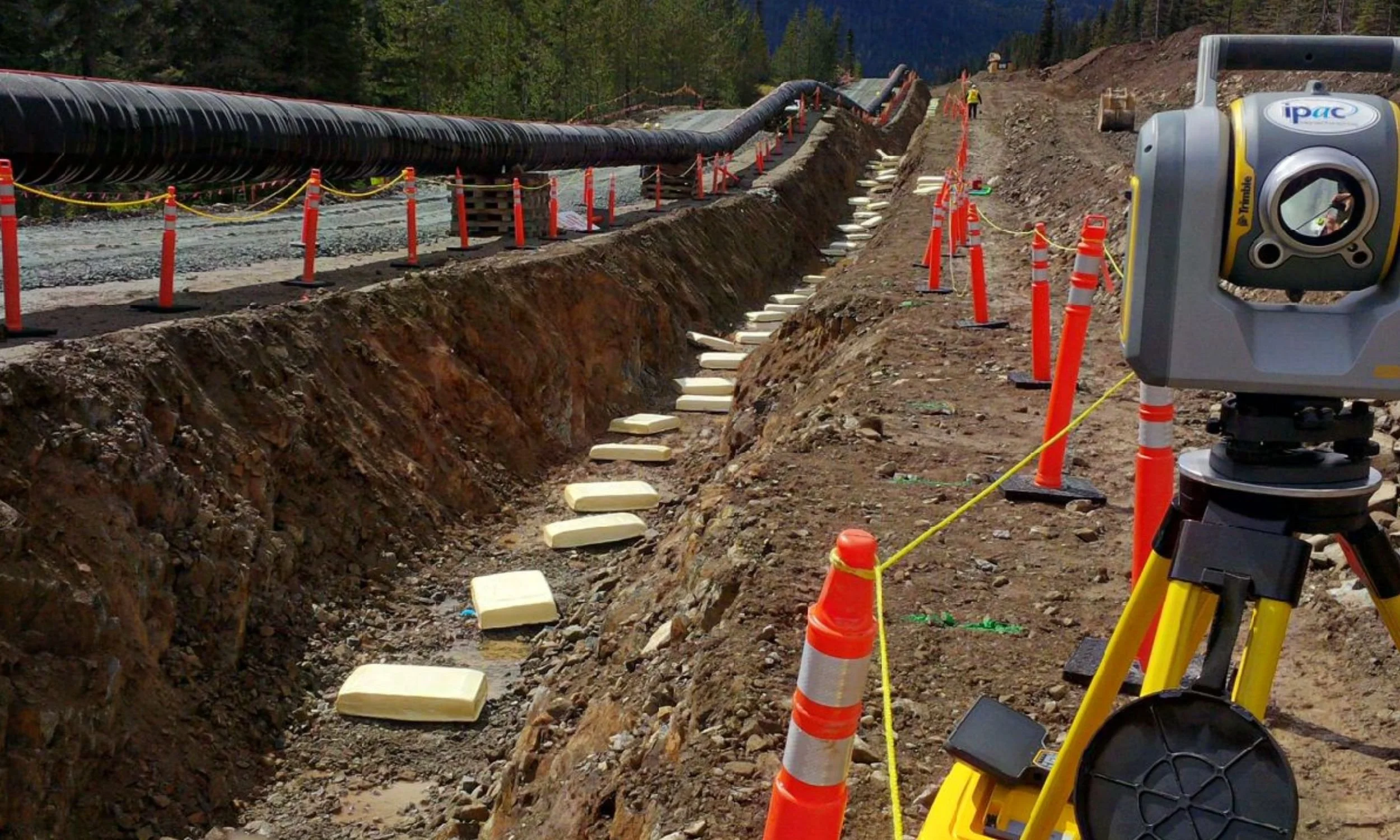
Precision survey (i.e. ground and drone), staking, topographic data, line locates, GIS analysis, and CAD mapping for government, resource, industrial, infrastructure, and energy projects throughout BC.

Forestry, Forest Tenure Management, Forest Engineering
Forest tenure management, landscape planning, timber harvest and road access planning and demarcation, all aspects of timber development, operational permitting (e.g. OLTC, MLTC, road permits, road use agreements, water licencing, etc), silviculture, road deactivation and reclamation prescriptions and project oversight, CAD/GIS mapping and reporting, visual impact modeling, RESULTS reporting, timber analysis/valuation for wildfire burn areas, and wildfire resiliency assessment and prescriptions, and much more. IPAC provides vegetation surveys for utility corridors, and VEG inventory plot measurements. Customers include government agencies including various Ministries and BC Wildfire Branch, First Nations, forest tenure holders, woodlot licensees, and industry clients in mining, utilities, energy (hydro and renewables), and oil and gas.

Log Fibre Management, Marketing, Brokerage
Resource road planning and geometric design is an IPAC specialty, including preparation of digital terrain models (i.e. DTM/DEM) via topographic surveys, LiDar, and import of digital files in various formats. Design software options include Civil 3D (Autocad) and RoadEng. Layout and survey of P-line and L-line, right-of-way marking, riparian assessment and stream classification, stream crossing design, timber assessment and valuation, mass haul, volume calculations, cost estimation, construction surveys, and as-built survey/mapping/drawings. Customers include government agencies, forest tenure holders, and industry clients in mining, utilities, energy (hydro and renewables), and oil and gas.

Resource Road Design & Transportation
Operational harvest planning and supervision, log manufacturing and merchandising, trucking logistics, log marketing, delivery schedules and scaling, waste assessment, and debris disposal. Marketing and brokerage services include contractor pay, stumpage payment, and detailed accounting. Customers include First Nations, private land owners, woodlot licensees, and industry clients in mining, utilities, energy (renewables), and oil and gas.
Our Staff
Our complement of staff ranges from 30 to 50 persons, with seasonal hires. All positions are full-time or full-time equivalents. IPAC enjoys exceptional employee retention, with many of the core staff having been with the company for more than 25 years. Average employee tenure is about 12 years, which is a significant multiplier to IPAC’s 34 years of operation. Our strategic alliances facilitate access to additional resources on an as-needed basis. Registered professionals such as RPBio, PEng, PGeo, and/or BCLS/CLS can be coordinated and incorporated in packaged offerings. IPAC strives to increase client convenience and reduce their procurement, coordination, and transaction costs. We are accustomed to working with issues related to chain-of-custody, professional liability, errors and omissions insurance, the Professional Governance Act (“PGA”), and more. The take-home message is that IPAC offers seamless coordination with other trusted, top-tier, professional organizations.
Frequently Asked Questions
Does IPAC provide services across all of BC?
1
Yes. IPAC is based in Kamloops and crews normally marshall out of that location; however, crews often mobilize and work out of remote locations throughout BC. IPAC is often able to establish remote marshalling points when given longer-term engagements and appropriate shift scheduling. IPAC has sufficient office equipment and gear to fully equip several remote office locations, and has in the past had offices located in Chetwynd, Fort St. John, Tumbler Ridge, Clearwater, Merritt, Grand Forks, Williams Lake, Lillooet, and Terrace in BC, as well as Elliot Lake in Ontario.
Does IPAC provide the services listed in-house?
2
Yes. All of IPAC's listed services are managed and delivered with in-house resources. That said, IPAC can provide additional services through alliance(s) with preferred and trusted service providers and other registered professionals.
Is IPAC an Indigenous-owned business?
3
Yes. IPAC is a majority Indigenous-owned consulting firm and a Canadian Council for Indigenous Business (“CCIB”) Certified Aboriginal Business (“CAB”) - gold standard. For clarity, IPAC does NOT assert rights or entitlement as an Indigenous business for set-aside contracts. We acknowledge and respect that set-aside contract opportunities are exclusive to those First Nations on whose traditional lands the projects occur. IPAC works in a supportive role through strategic Indigenous partnerships, joint ventures, and/or Memorandums of Agreement with key First Nations members, businesses, and/or communities.
What First Nation is IPAC associated with?
5
IPAC's majority owner is a proud Taku River Tlingit First Nation (“TRTFN”) citizen and member. No formal business partnership arrangement is currently in place with TRTFN.
Is IPAC willing to consider new First Nations partnerships?
4
Yes. IPAC is open to forming new partnerships where doing so does not overlap and/or conflict with any existing partnership, joint venture, or MOA. Preference is given to sustainable partnerships. Accordingly, we request active participation in the venture by our Indigenous partner. We recognize that the partnership must create value for our partner and the customer. In our experience, anything less is not sustainable. IPAC is open to working collaboratively with project proponents and/or First Nations to facilitate meaningful opportunities for Indigenous participation and contracting. IPAC has proven itself able to assist new start-ups to gain traction on set-aside contracting opportunities for a broad range of services. New Indigenous companies are often constrained at start-up by safety certification and insurance requirements, staffing and resource limitations, and more. IPAC can step in to overcome those challenges while delivering a diversity of top-tier services. We view these opportunities as true value-add for our partner and the customer.
What is a First Nation “shell” company?
6
A First Nation “shell” is any business, whether it is a limited corporation (i.e. “Ltd, Corp, Inc”), limited partnership (i.e. “LP”), joint venture (i.e. “JV”) that is at least 51% owned and controlled by an Indigenous entity, but where the contract services are subcontracted to a non-Indigenous company - usually the minority partner.
How does a partnership with IPAC differ from a typical First Nation “shell”, and why is it important?
7
IPAC’s certification under CCIB as a CAB (i.e. Certified Aboriginal Business; aka - genuine Indigenous enterprise) means that any work undertaken by IPAC fully qualifies, and can be legitimately reported as, “Indigenous”. All services performed by IPAC are genuinely Indigenous.
Why is this important? In March 2026, the Procurement Ombuds released a scathing report revealing widespread compliance failures in Canada’s Procurement Strategy for Indigenous Business (“PSIB”). The review exposed a lack of oversight, absent directory verification, and the risk of “shell companies” draining funds meant for genuine Indigenous enterprises. The report identified a number of Core Recommendations intended to address these concerns. Additionally, a number of genuine Indigenous businesses listed under CCIB have also identified this matter as a concern as it relates to set-aside contracts. Many “shells” leverage the larger size, diversity, and resources (i.e. economies of scope and scale) of the non-Indigenous partner to compete with legitimate First Nations businesses. This is especially problematic when there is a competitive element to the award of set-aside contract. Legitimate Indigenous businesses tend to be smaller, and often constrained to a specific geographic region (i.e. territory) due to indigeneity; hence, economies of scope and scale are not in their favour. Non-Indigenous “shells” that perform the work that is supposedly set-aside for Indigenous enterprises impede the growth and capacity building objectives that virtually all genuine Indigenous enterprises struggle to overcome.
What is the difference between log merchandizing, log marketing, and log brokering?
8
Log merchandizing is a process of manufacturing and/or sorting logs in accordance with strict specifications into various log products such as pulp, sawlogs, peelers, poles, house logs, etc. Factors such as length, diameter, shell thickness, sweep, species, rot, knot habits, green or dry, etc must be matched to market opportunities.
Log Brokering is the process of negotiating and arranging for the sale of timber and/or log products on behalf of a seller. IPAC usually acts as agent for a seller, but is at times brought in by the buyer looking for a specific log or fibre product.
Log marketing is also the process of negotiating the sale of manufactured logs, or standing timber, but typically incorporates logistics and oversight related to timber harvesting, log merchandising, trucking, accounting, and much more. IPAC has a “stable” of service providers, including loggers and truckers, that may be deployed. IPAC provides the requisite assurances that parties to the transaction need in order to move forward. This is the most common service provided for private land owners and non-forest industry clients.

Please Get in Touch if You Want to Discuss Your Project Needs
Whether your needs are specific or more diverse and complex, IPAC is ready to support you. We operate throughout BC. Contact us to get a discussion started, or just explore our Sectors page to see how we've delivered on projects in the past.